What Is Gota Patti? A Guide to Rajasthan's Golden Embroidery

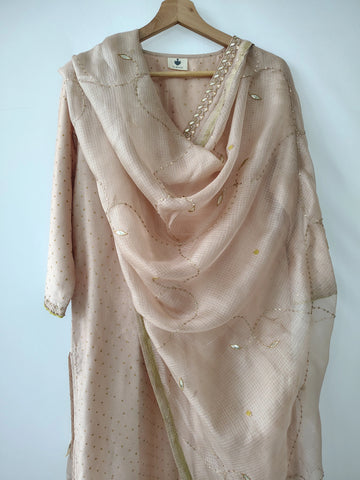
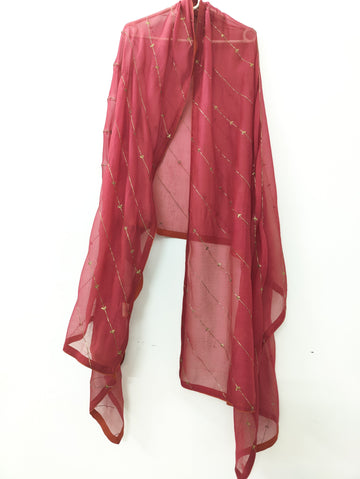
If you have ever seen a dupatta reflect light in the most sophisticated manner, at a mehendi, a wedding or a Teej or Diwali celebration, there is a good chance it was gota patti. It is one of Rajasthan's best-loved crafts, and it is at the heart of almost everything we make at Surahi in Jaipur.
What gota patti actually is
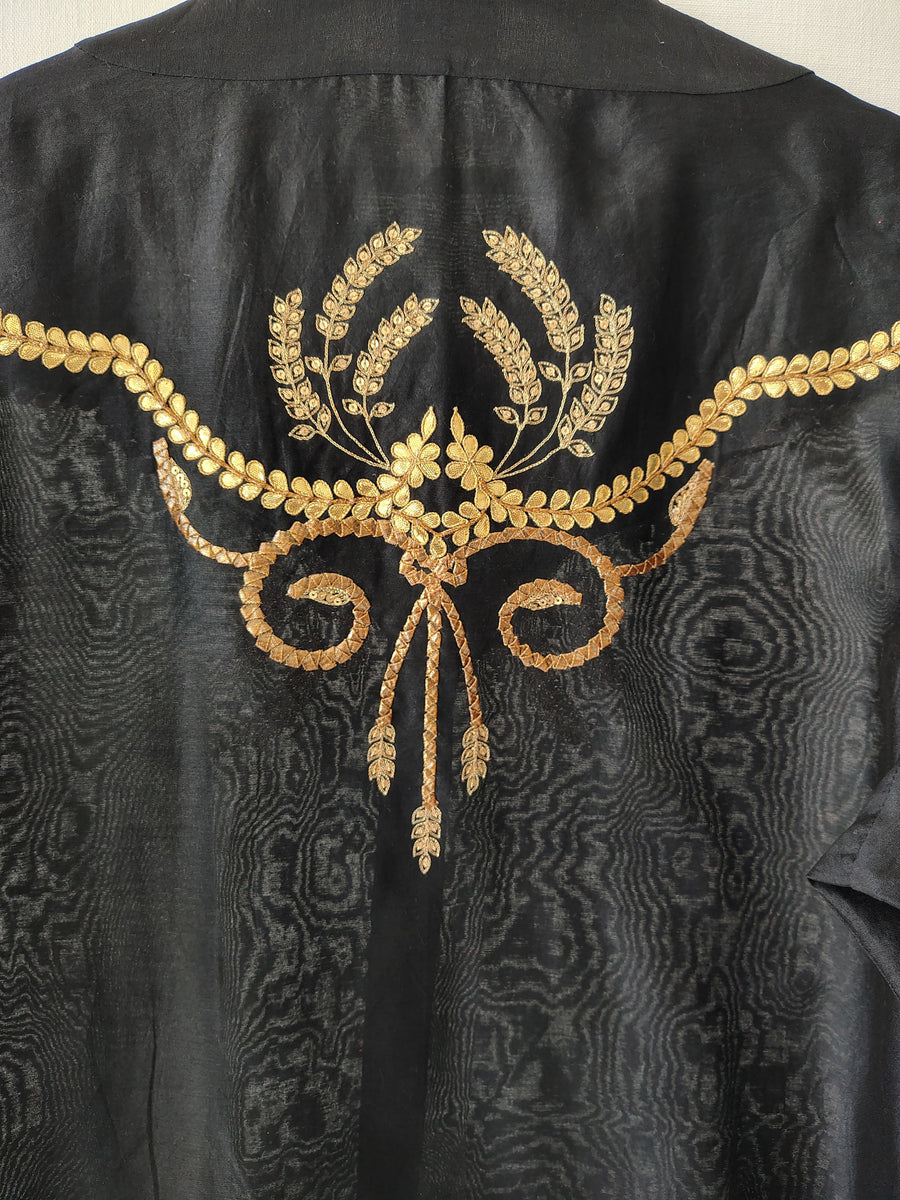
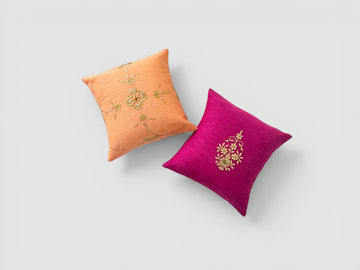
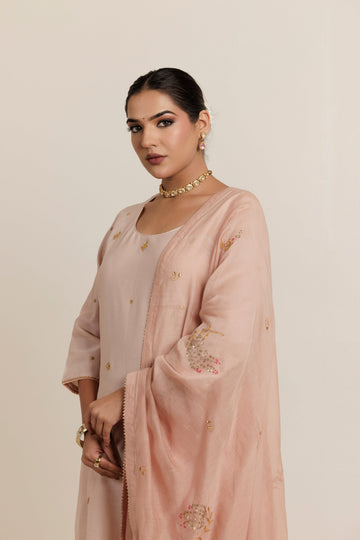
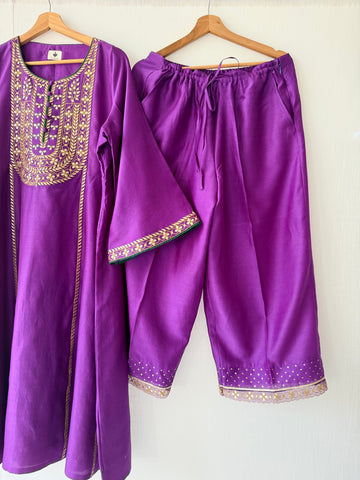
Gota is a ribbon of thin metal/metallic strips woven together. Patti means leaf. Karigars cut the ribbon into small pieces, fold and shape them into leaves, petals, placing on motifs like birds and vines, and then hand-stitch each little piece onto the fabric. The result is embroidery that shines softly rather than glitters.
Where it comes from
Gota work grew up in the courts and homes of Rajasthan, where it was used on odhnis, lehengas and festive turbans. Jaipur is still one of its main centres, and many artisan families have passed the skill down for generations.
How a gota patti piece is made
- Design and tracing. The motif is drawn and traced onto the fabric.
- Cutting and folding. Ribbon is cut and folded into each shape by hand.
- Stitching. Every leaf is placed and stitched down, often finished with thread, sequins or zardozi for depth.
- Finishing. Borders, tassels and edges are completed and the piece is checked.
Depending on the density of the design, a single dupatta can take several days to months of handwork.
How to recognise hand-done gota patti
- Small irregularities in the fold of each leaf: no two are exactly the same.
- Visible fine stitches holding each patti, when the embroidery is seen form the backside.
- A soft, flexible drape: the fabric still moves freely and does not harden like in machine embroidery due to excess of zari stitches.
Wearing it today
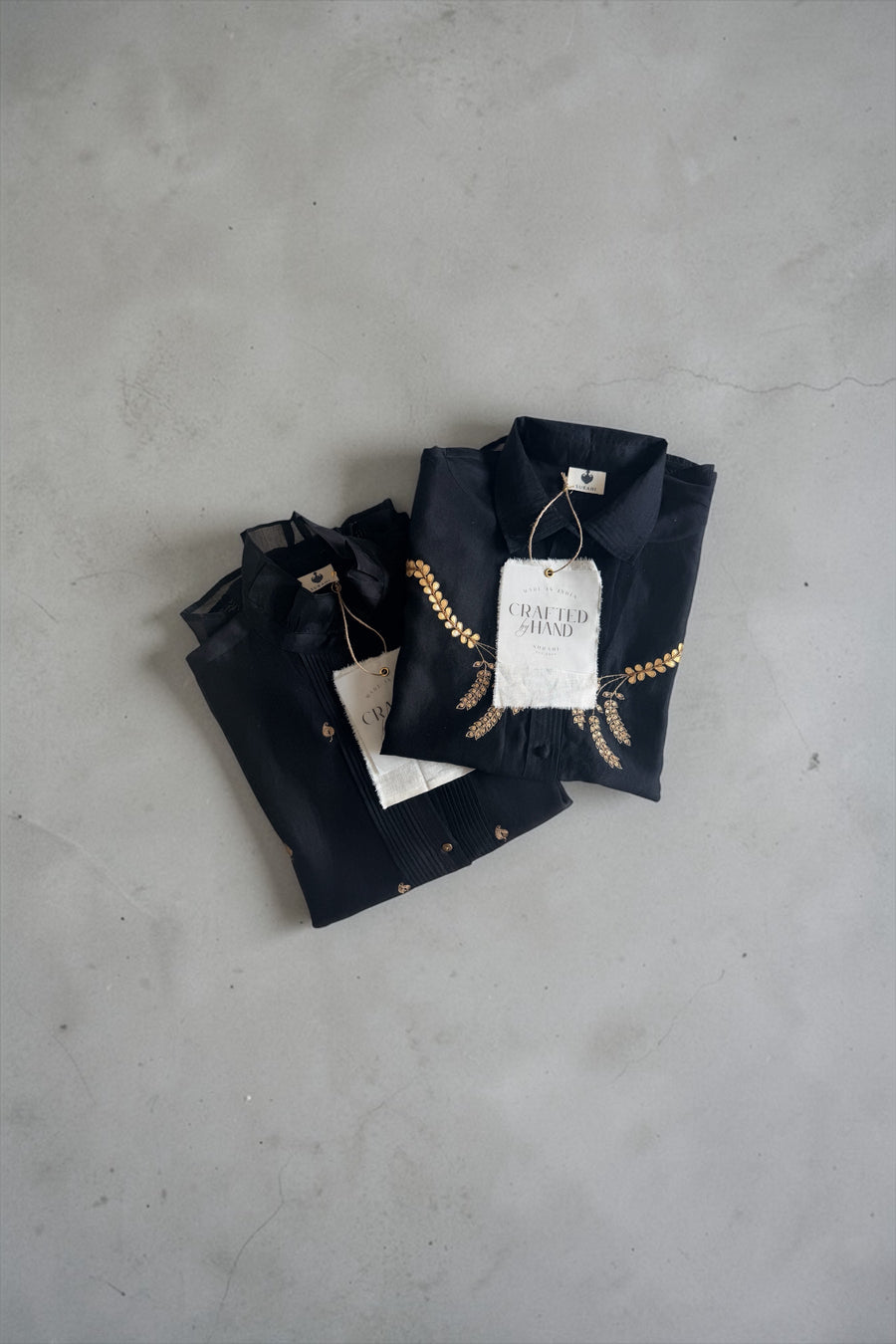
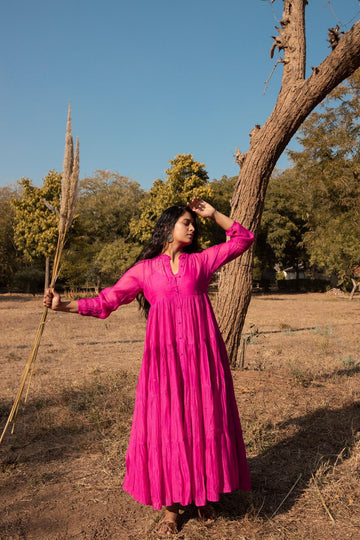
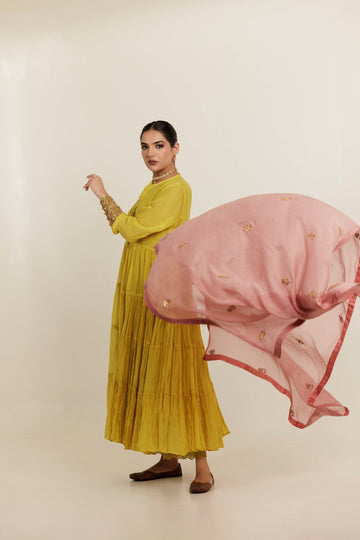
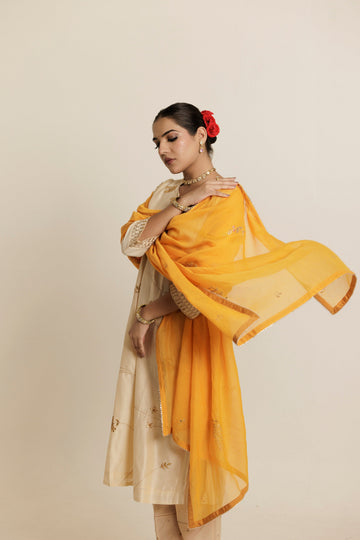
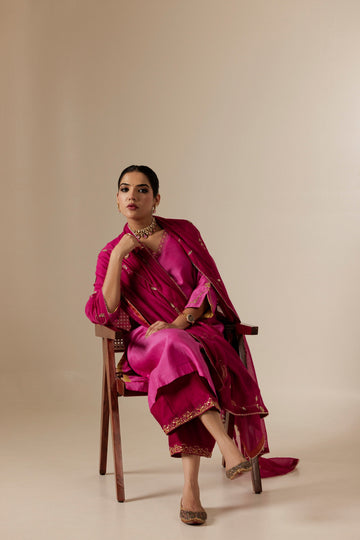
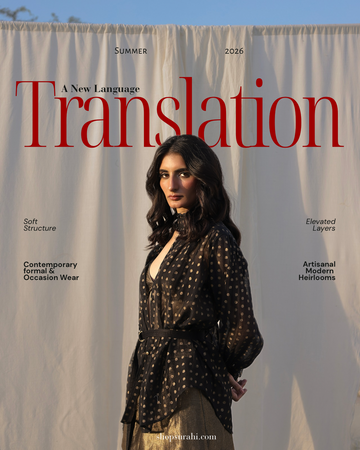
Gota Patti finds its place in a modern wardrobe when approached with restraint. At Surahi, we reinterpret this traditional Rajasthani craft through contemporary silhouettes, thoughtful placements and a lighter design sensibility.
Rather than reserving it for weddings and special occasions, we explore ways to make Gota Patti relevant to the way women dress today. A delicately embroidered neckline, a subtle detail on a sleeve or a single statement panel can bring just the right amount of craft to an otherwise understated piece.
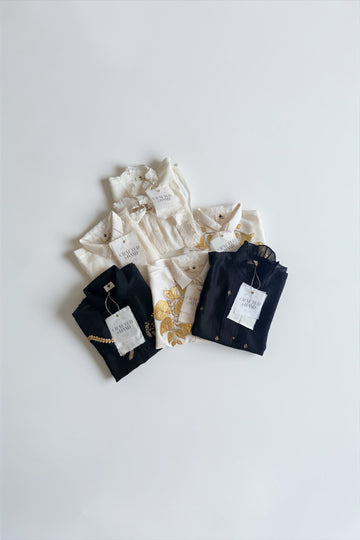
For us, it is about preserving the beauty of the tradition while allowing it to evolve — creating pieces that feel rooted in their heritage, yet effortless and relevant in the present. A delicate gota dupatta over a plain kurta, or a single embroidered motif on a crisp shirt. Explore our hand embroidered shirts and kurta sets to see the craft up close.